Camilla Derrico Pop Painting Inspiration and Techniques From the Pop Surrealism Art Phenomenon
Make your own pop art portrait

Hither we'll catechumen a bland portrait into a pop art masterpiece. It'due south a brilliant way to get artistic and enliven your forgettable shots. For this tutorial, we'll be using Photoshop filters, option tools, Adjustment Layers and Layer Masks, and the Hue/Saturation command.
- Popular Art: 8 artists every designer should know
Yous may have noticed that our showtime image isn't that sharp! This is an added bonus of pop art images: you can utilize images that would otherwise have been discarded.
01. Make it mono
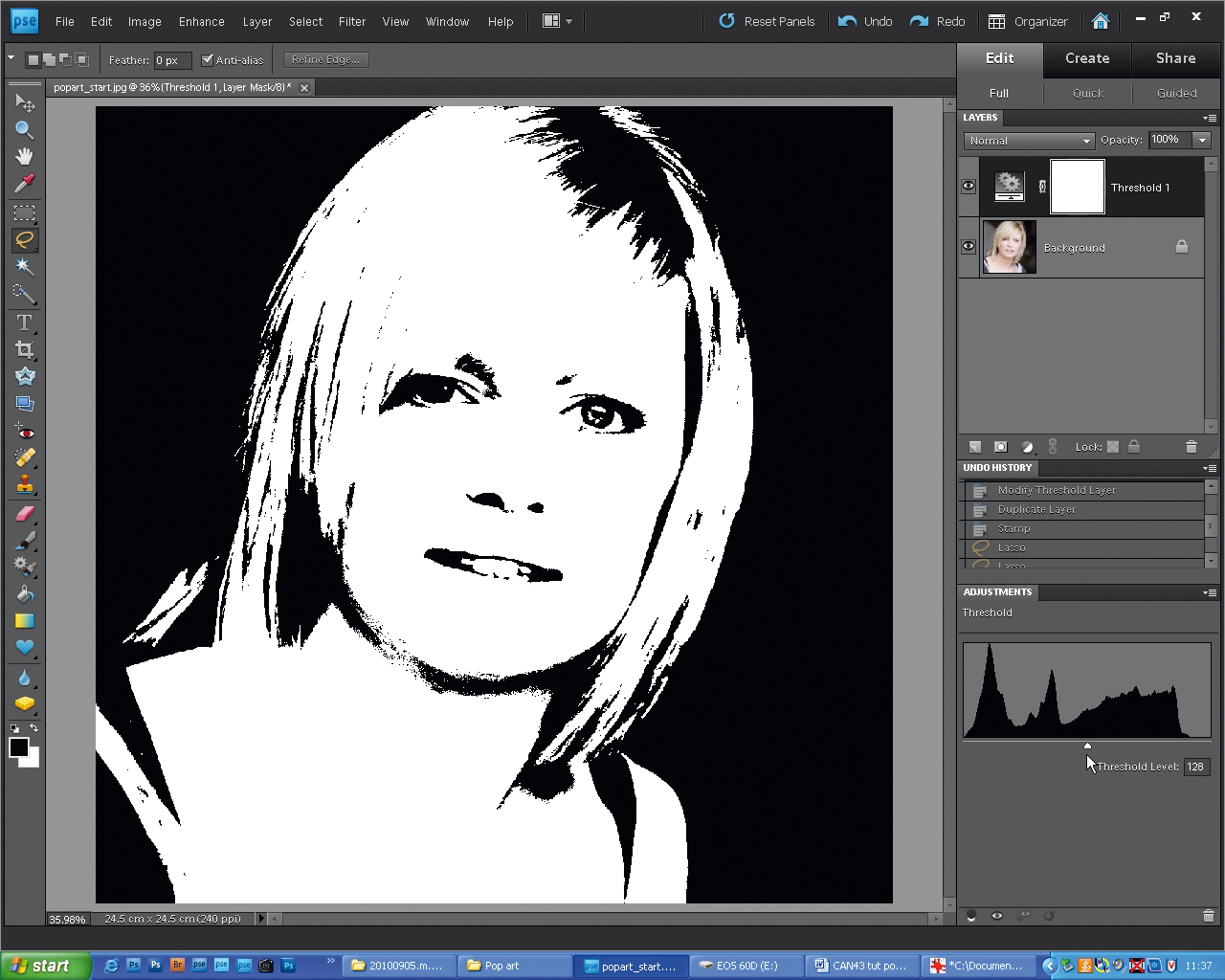
First open up your portrait in Photoshop. Go to 'Layer > New Aligning Layer > Threshold', and set Threshold to about 128. To bring out more than detail in the eyes and rima oris, select the 'Background' layer, go to 'Layer > Indistinguishable Layer'. From 'Filter > Sketch > Stamp', set Light/Dark Balance to 26 and Smoothness to 1. Now use the Lasso tool to describe around the optics and mouth, holding down Shift to add to your selection each time.
02. Brighten your background
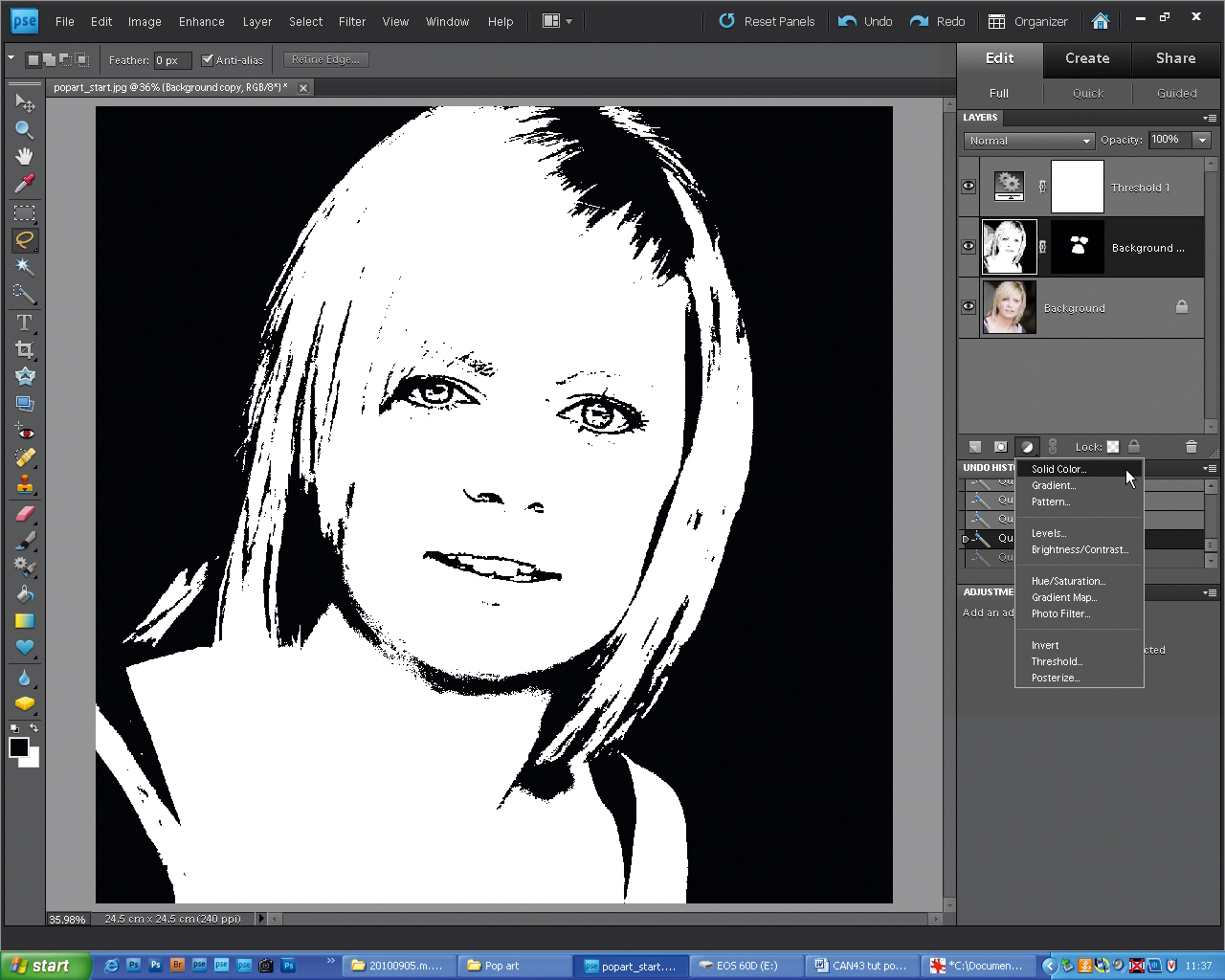
Click Add Layer Mask to create a mask out of your selection. At present to change the groundwork colour from black to light-green. Highlight the top 'Threshold one' layer and utilise the Quick Selection tool to select the groundwork either side of the effigy. Concur Alt to subtract from your choice in order to tidy information technology upwardly. Click the half-moon icon on the Layers palette, and select a Solid Color Adjustment Layer.
03. Make clean upwards edge detail

Cull a green from the Colour palette. To tidy the edges, use the Brush tool (printing B) to paint over your Layer Mask to reveal detail beneath. Press D to modify the default foreground/background colour to white/black, press X to set foreground colour to black, and so paint round the edges of the hair if needed. Click X to toggle between a white/black castor if y'all need to paint the green groundwork back in.
04. Make the hair stand out

To turn the hair bright yellowish, get-go grab the Magnetic Lasso tool. Start at the bottom-left of the pilus and describe advisedly effectually the outside border. Use your creative sentence when it comes to the inside strands and fringe! Keep drawing until you lot reach your start point again, and click when two pocket-size circles appear to complete the selection. Over again create a Solid Color Aligning Layer, pick a xanthous, and click OK.
05. Blend and brush

Use the drop-downward carte du jour in the Layers palette to set the Blending Style to Multiply, revealing the hair outlines underneath. Reduce Opacity from 100% with the slider to lessen the colour's bear on. Don't worry if your option isn't dandy – popular art should wait a little uneven! You lot can tidy information technology upward with a white/blackness brush over the Layer Mask to add/remove the yellow.
06. Accommodate peel tones

Use the Quick Choice tool to select the face, neck and chest. Ensure 'Sample All Layers' is ticked. Printing Alt to remove areas such as shoulder straps from your selection. Then repeat as before; create a Solid Colour Adjustment Layer, choose a pink, set up Blending Manner to Multiply, adapt Opacity if necessary. Use a 30-pixel white/black castor to pigment over the Layer Mask and make clean up any unwanted white bits.
07. Alter eye color

To turn the eyes blue, zoom right in (ctrl and +) and use the Lasso tool to draw around the iris of each eye. Then repeat the steps above to turn them blue, dropping Opacity down for more realistic expect, and once again employ Brush tool on a Layer Mask to tidy upward any spilt ink! Do the same for the shoulder straps; we chose a purply-blue colour here.
08. Increase canvas size
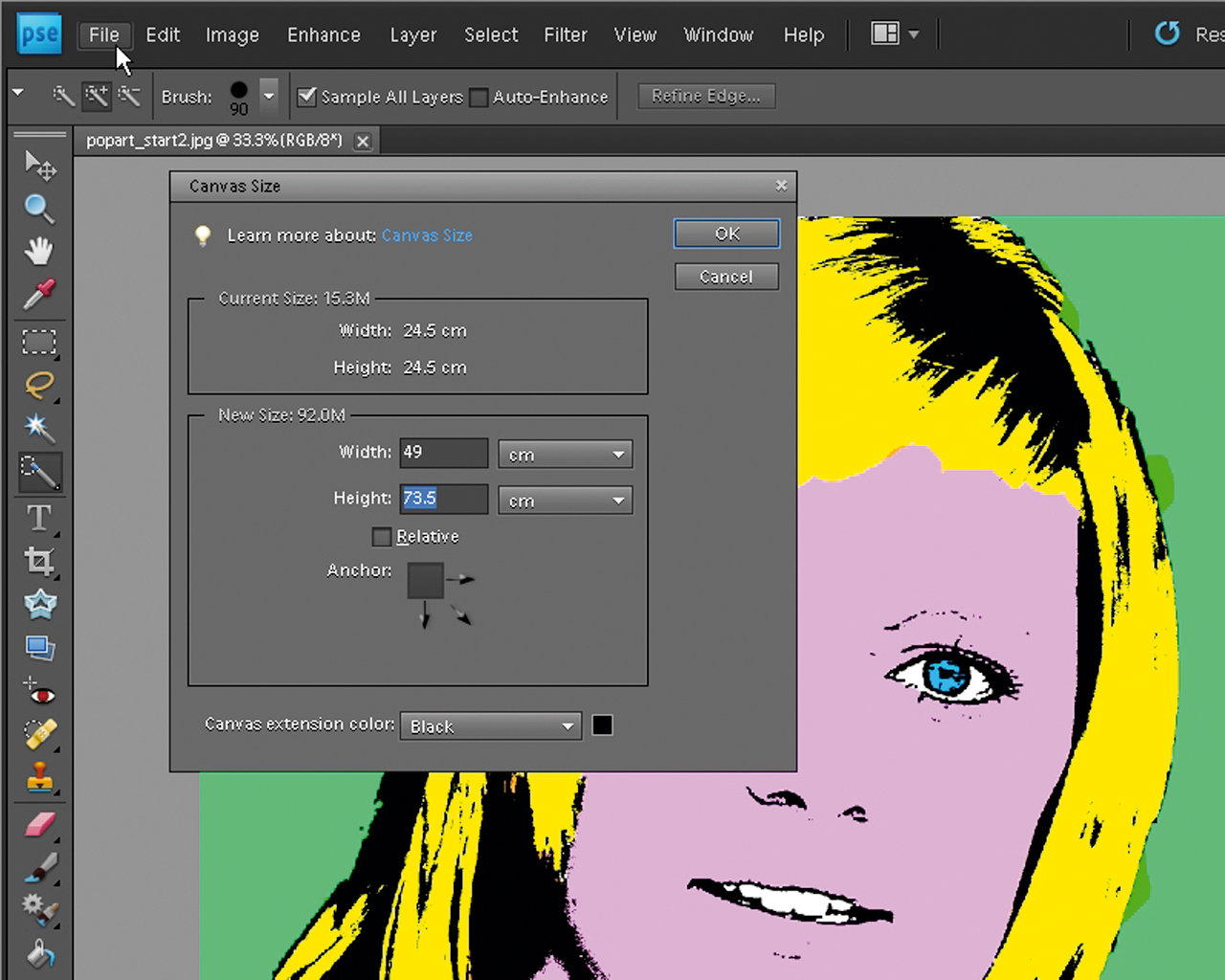
To create more versions, first get to 'Layer > Flatten Image', and so 'File > Save As', and rename your file (we've used 'popart2.jpg'). Go to 'Epitome > Resize > Canvas Size'. To extend the canvas, untick the Relative box, click the peak-left arrow to anchor the epitome, and change to width 49cm and height 73.5cm for a portrait image. Finally, ready the Canvas Extension Color to black.
09. Mix it upward

Salve this new paradigm with a new version name ('popart3.jpg'). Reopen 'popart2.jpg', and press Ctrl+U to open Hue/Saturation. Only move the Hue slider left or right to create a dissimilar coloured pop art prototype. Then use the Move tool to elevate-and-drib your new popular art flick on to the blank sheet space on 'popart3.psd'.
10. Put it all together

Get dorsum to 'popart2.jpg', open Hue/Saturation and repeat the above process until yous have four or half dozen vibrant images on the 'popart3.psd' image. Movement the images around on the canvas (highlighting the right layer) so the images are in the best lodge and with no similar colours next to each other. Go to 'Layer > Flatten', and save information technology as a single-layered JPG.
Related articles:
- Colour in Photoshop: top tricks
- Get artistic with Photoshop Blend Modes
- Brilliant Photoshop tutorials
Related articles
Source: https://www.creativebloq.com/photoshop/make-your-own-pop-art-image-11121384

Post a Comment for "Camilla Derrico Pop Painting Inspiration and Techniques From the Pop Surrealism Art Phenomenon"